Academic project
Talent & Go
Master in Digital Product Management, Nuclio Digital School · 2025 · Team of 4
- Context
- Master's final project, Nuclio Digital School
- Role
- Proposed the original idea · Research design and prototyping
- Team
- 4 students
- Period
- 2025
- Tools
- FigmaCondensAI personas
Side project
In short
Problem
Finding job opportunities is relatively easy. Understanding which career paths are realistic for you, what skills you're missing and how to get there is much harder.
What I did
I proposed the idea and, as a team, we took it through the full product cycle. I focused on the research design and the Figma prototype.
Result
Research reframed the problem from training to career orientation. Talent & Go ranked 2nd out of 8 final projects in the Master's cohort.
160
survey responses
job seekers, recruiters and training providers
12
interviews
including the former CEO of a job platform
13
platforms benchmarked
services, UX, business model, positioning
2nd
of 8 final projects
Master's cohort
01The opportunity
Finding job opportunities is relatively easy. Understanding which career paths are realistic for you, what skills you're missing and how to get there is much harder. Job seekers end up applying to roles that don't fit, recruiters receive applications they can't use, and training providers struggle to show how a course changes someone's career. We saw an opportunity in the space between the three: helping people see where they could go, and what it would take.
02My role
The project started from an idea I proposed. Within the team, I focused on designing the research and building the clickable prototype in Figma, which I learned along the way. As a team, we shaped the value proposition, the business model, the MVP scope, the roadmap and the go-to-market plan together.
03The research that changed our direction
Our initial hypothesis was that people didn't know what training they needed. We tested it with 12 interviews across job seekers, recruiters and training providers, a bonus interview with the former CEO of a job platform, surveys with 160 responses and a benchmark of 13 platforms, using AI (Condens) to spot patterns.
Job seekers · 135
71.9%
were open to exploring roles beyond their current path
Job seekers · 135
71.1%
said information on the skills they need is very important
Job seekers · 135
56.5%
had been looking for a job for more than four months
Recruiters · 16
75%
named unqualified applicants as their main challenge
Recruiters · 16
38%
gave lack of time as the reason they don't send feedback
Training providers · 9
77.8%
see communicating a course's career impact as essential
Personalisation, both ways, was the key: every candidate saw offers matched to their profile, and companies saw candidates ranked by fit.
04Turning insights into product decisions
We turned the findings into a value proposition: a tool that personalises career paths, from discovering a realistic target role to closing the gap with training and finding the right jobs. Personas built from real insights and synthetic AI personas kept every decision anchored in the three sides of the platform. A user story mapping workshop, prioritised with MoSCoW, defined release 1 around the core job to be done: discovering a career path you can confidently pursue.
05Designing the experience
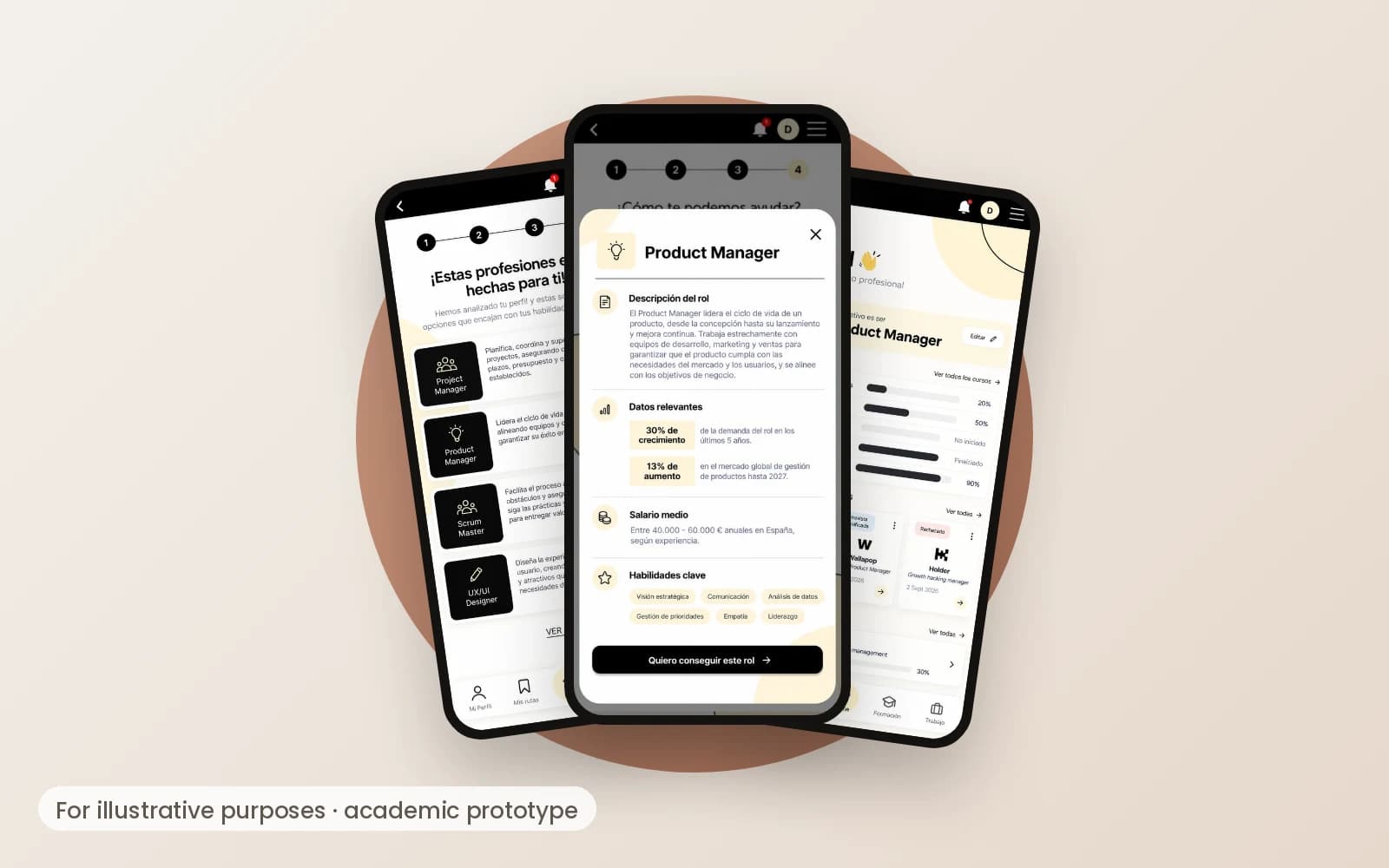
I designed the experience in Figma, from low-fidelity mock-ups to a clickable prototype, around four journeys.
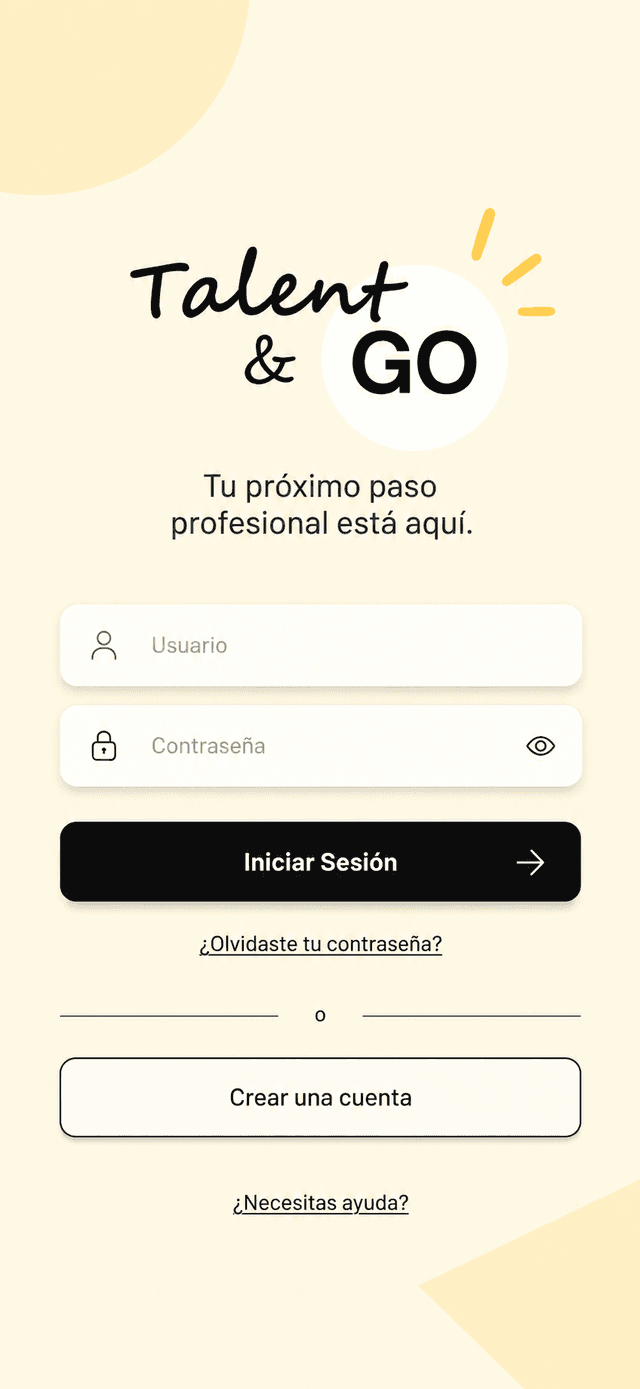
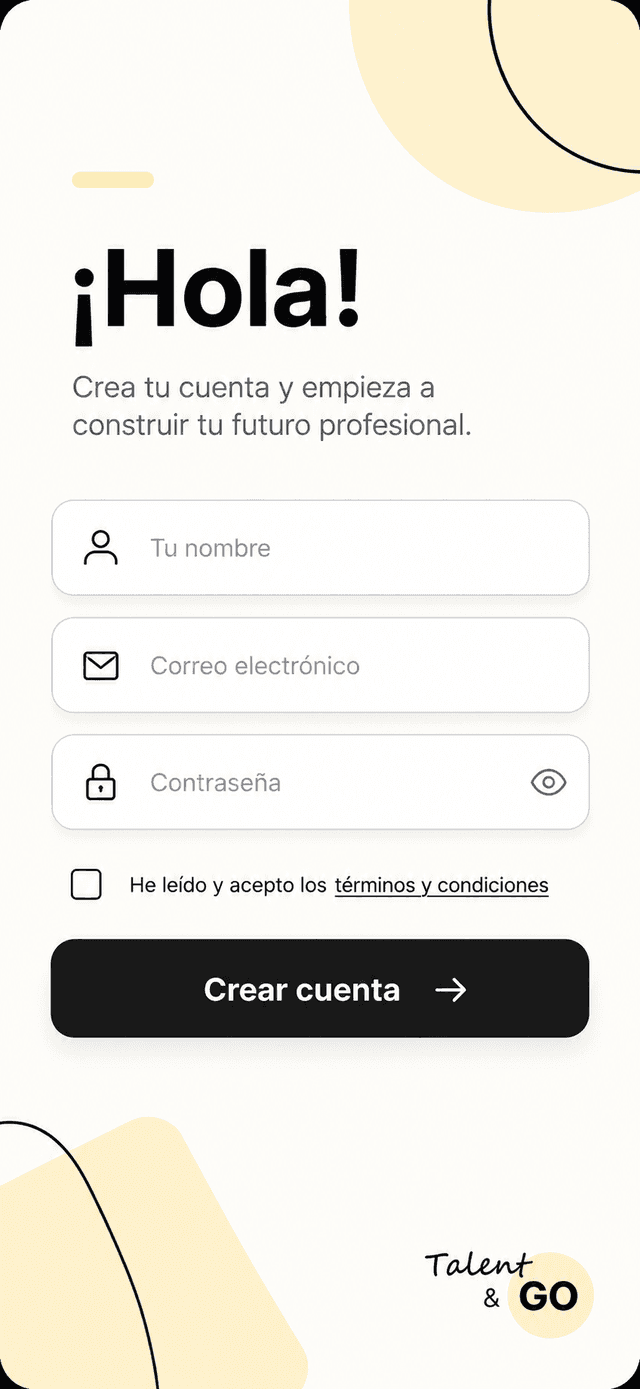
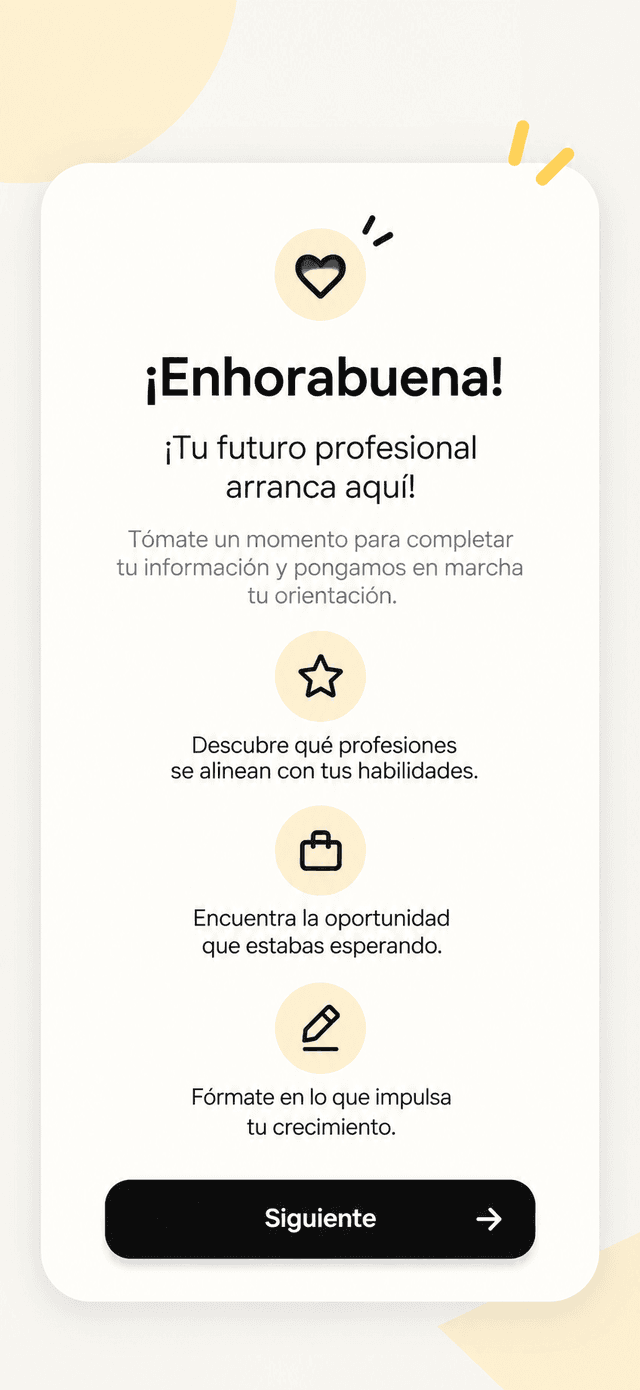
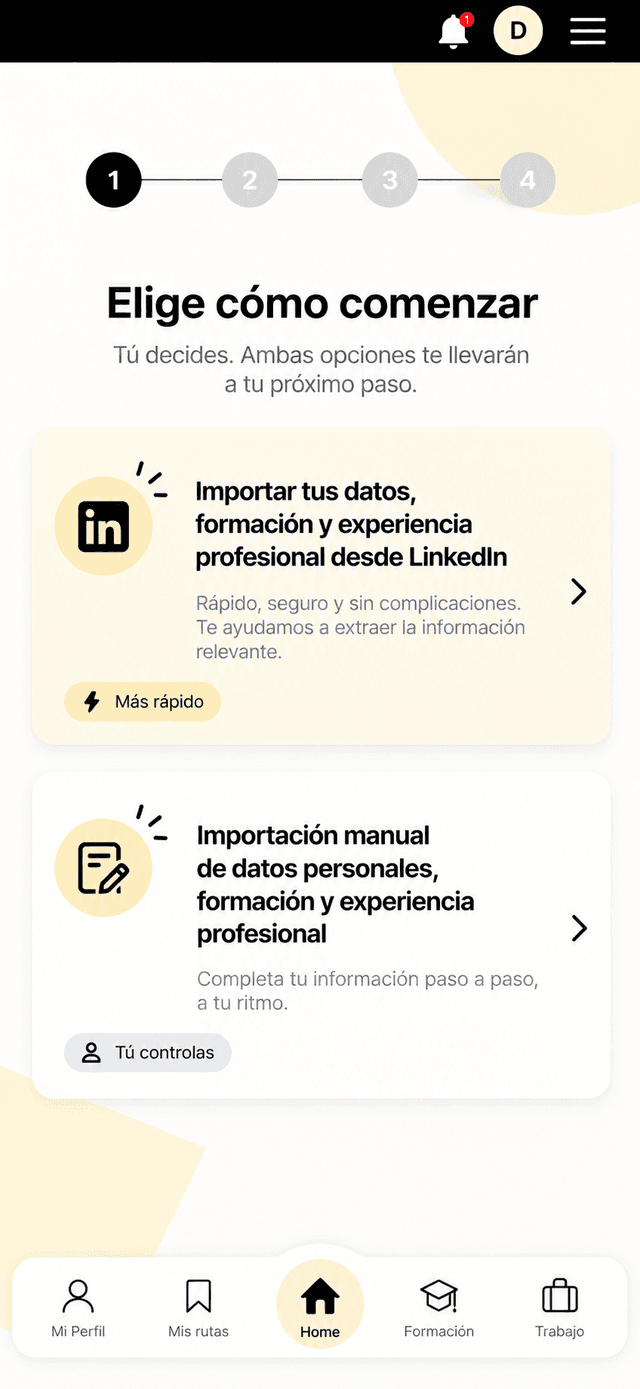
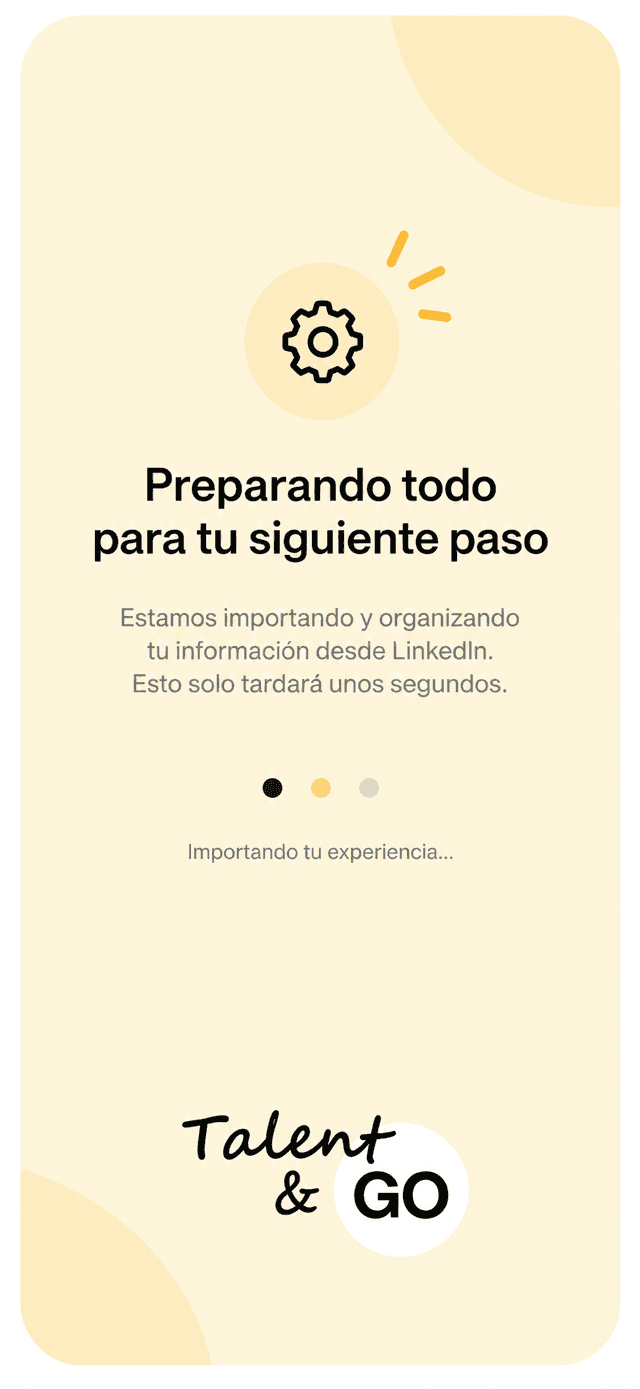
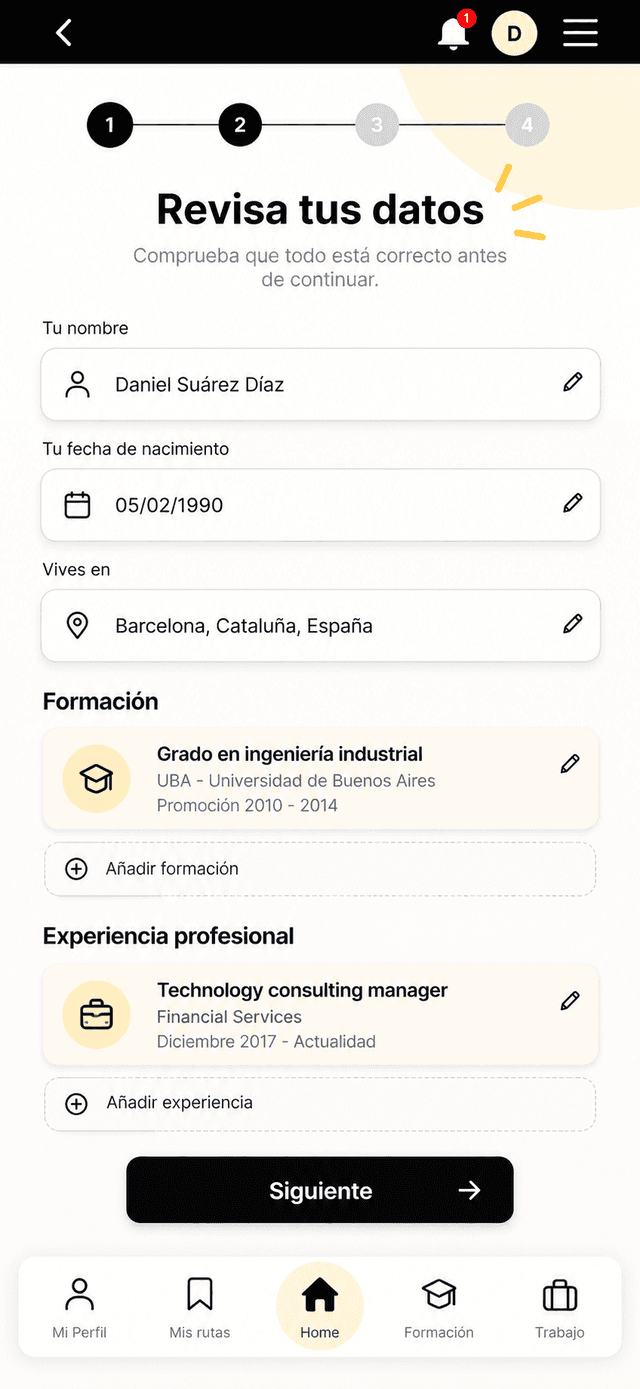
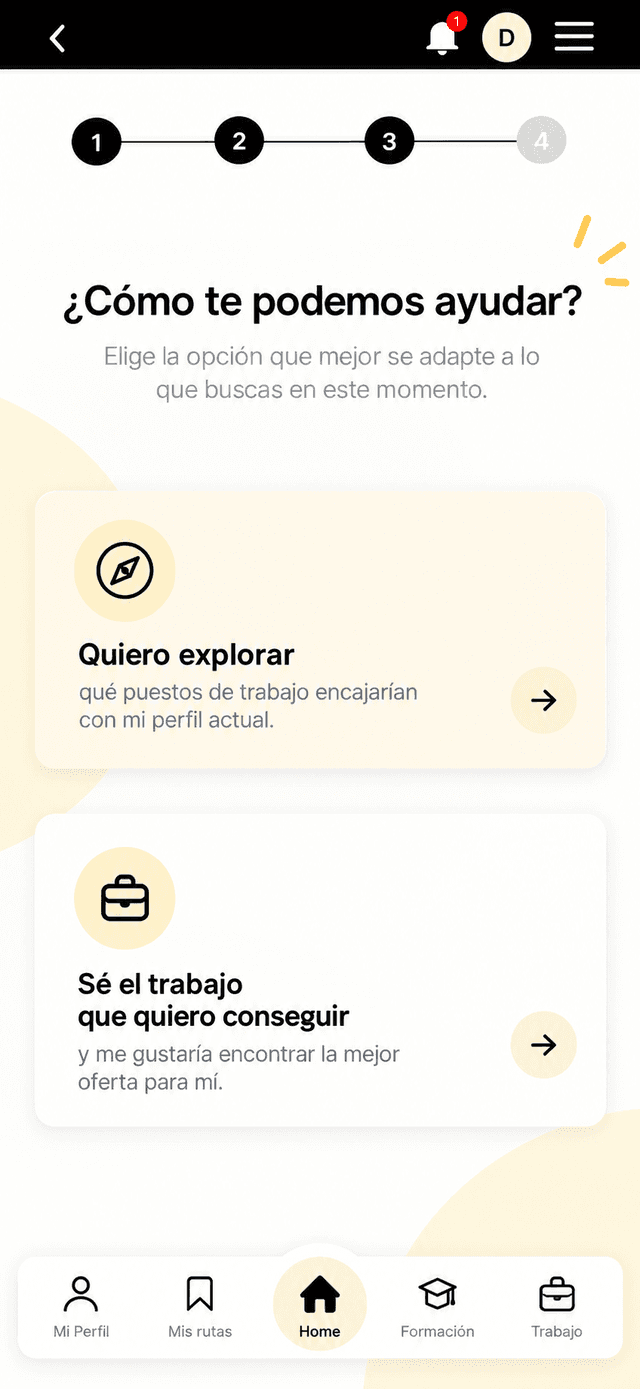

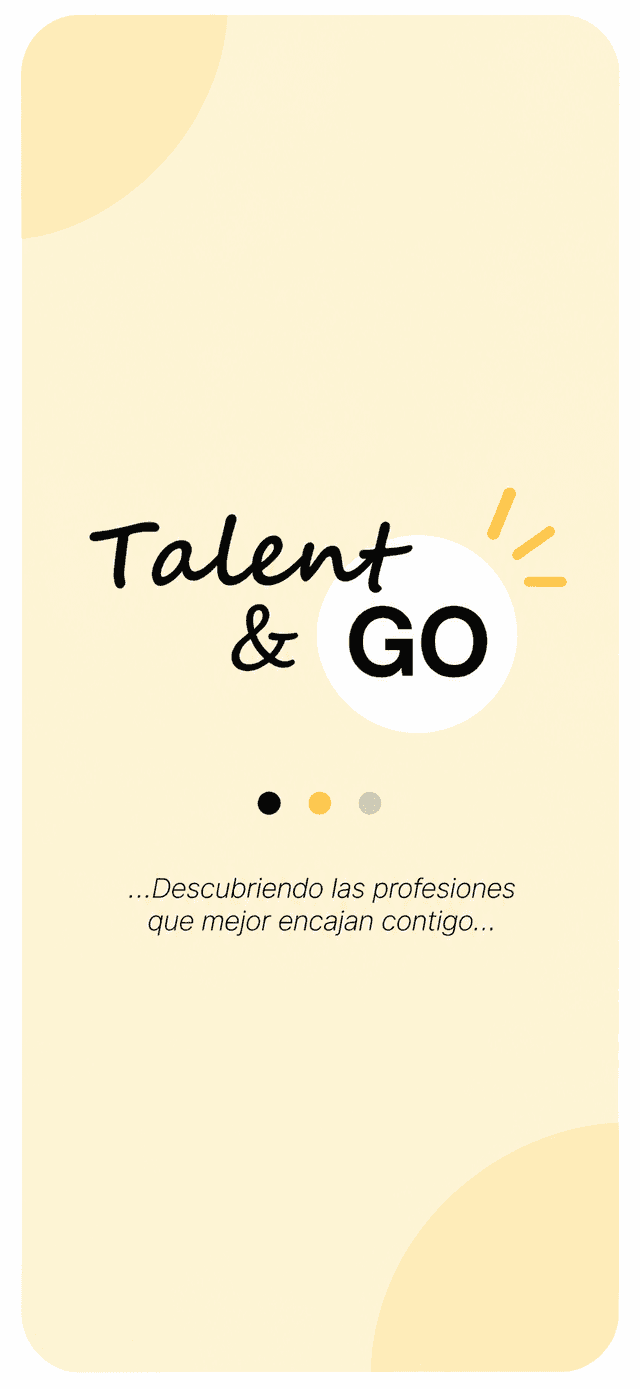
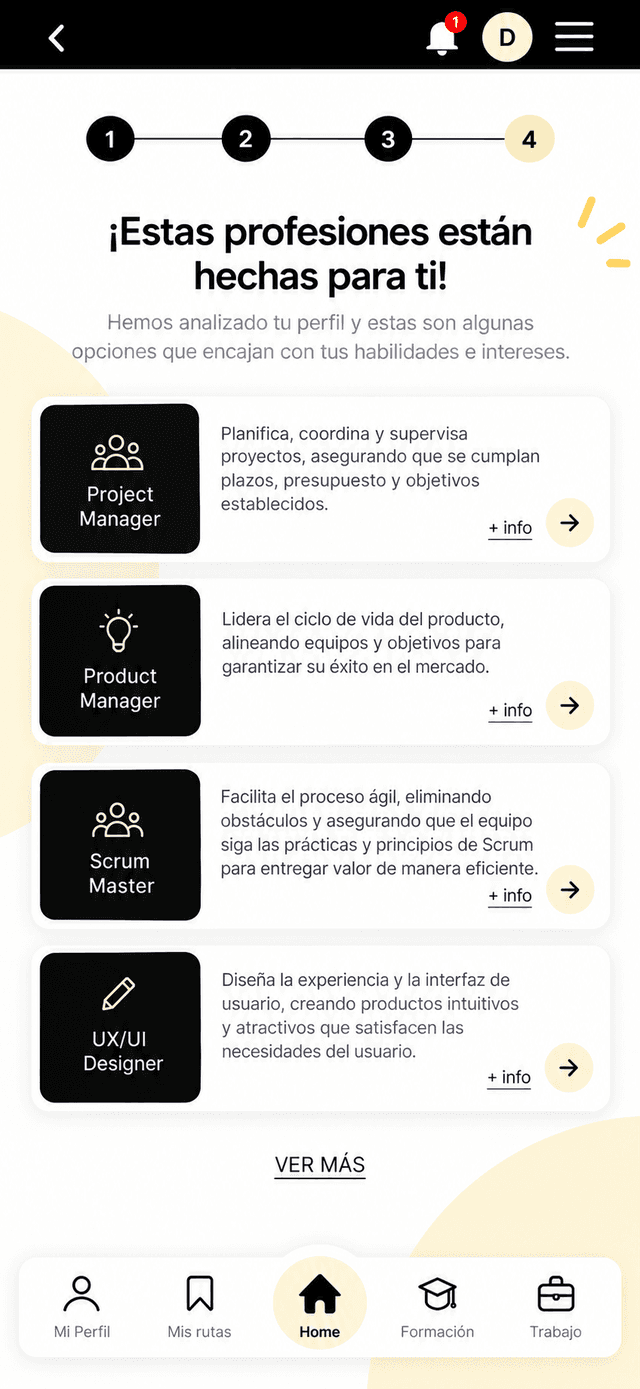
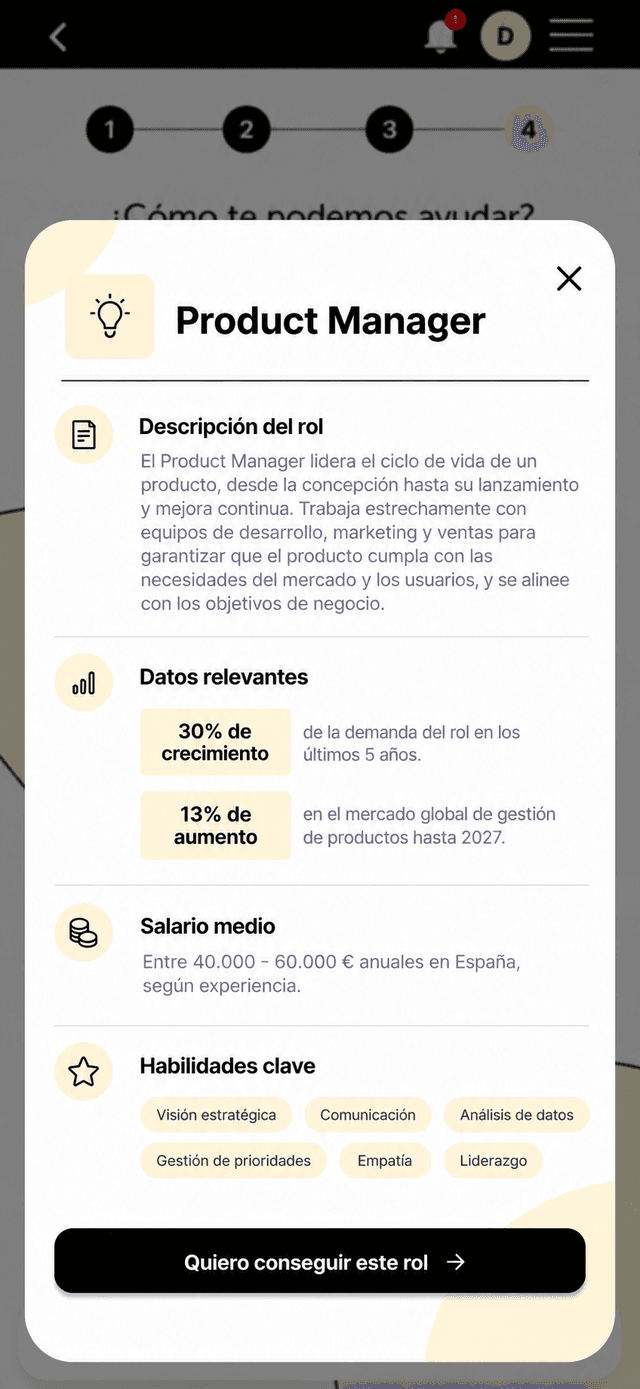
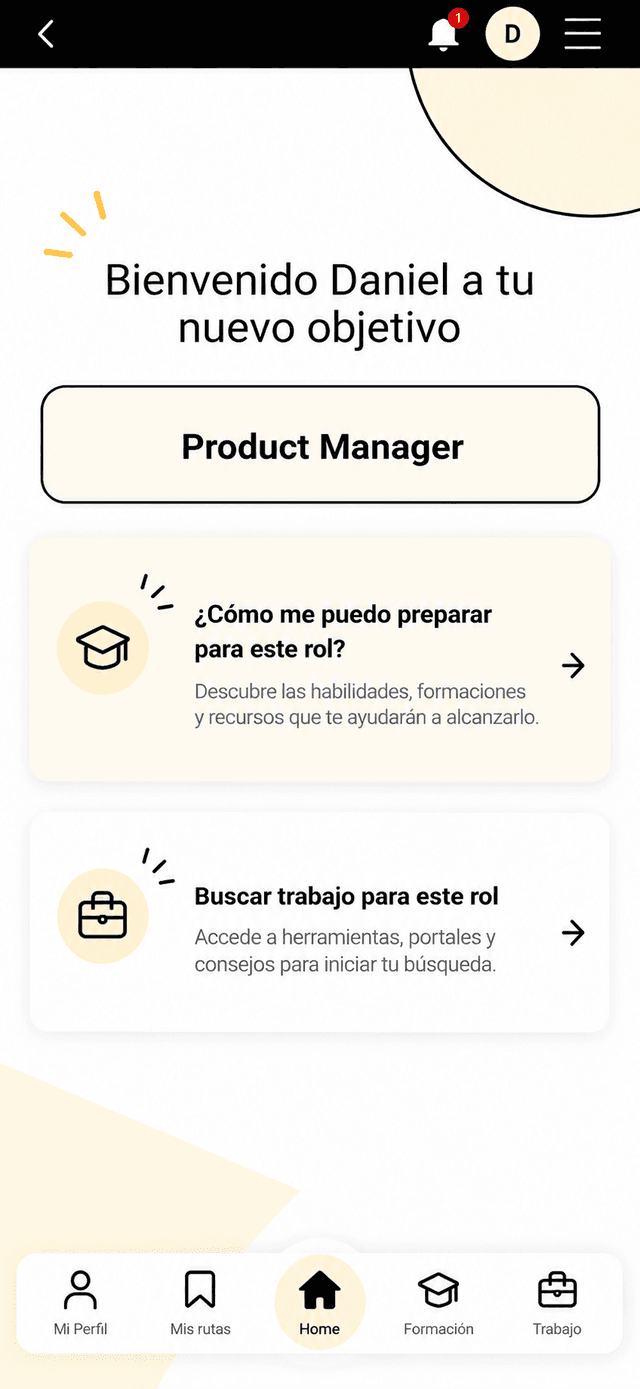
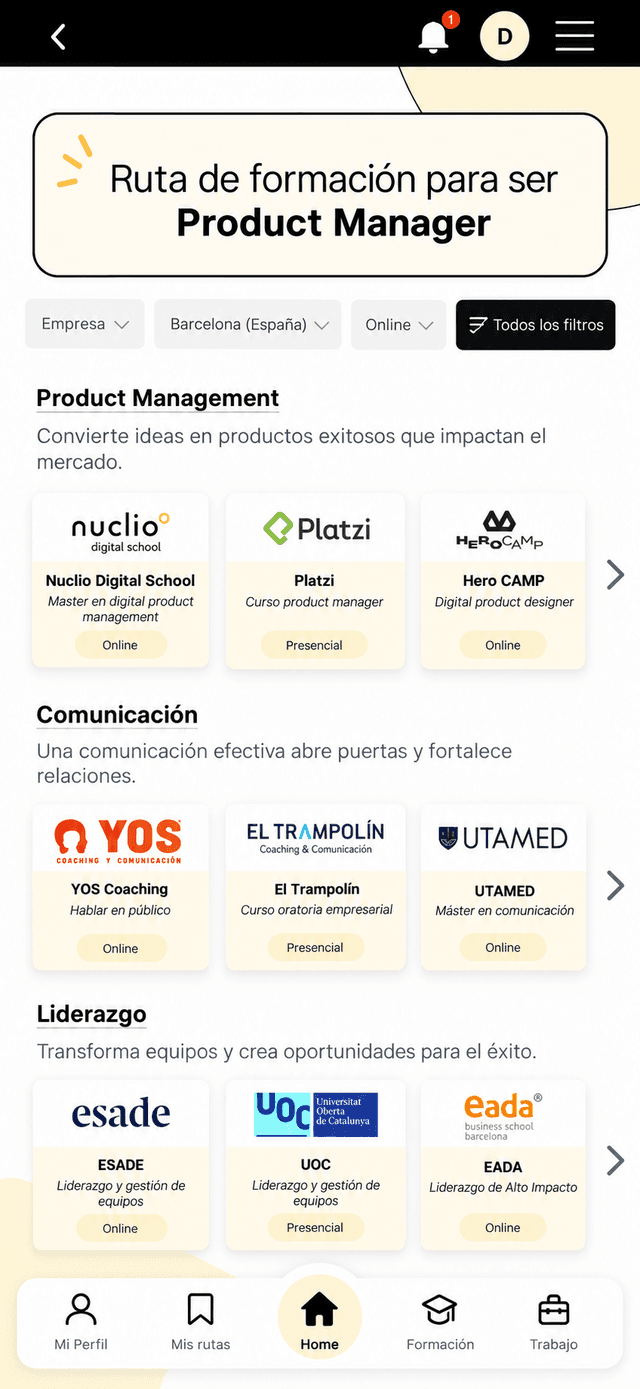
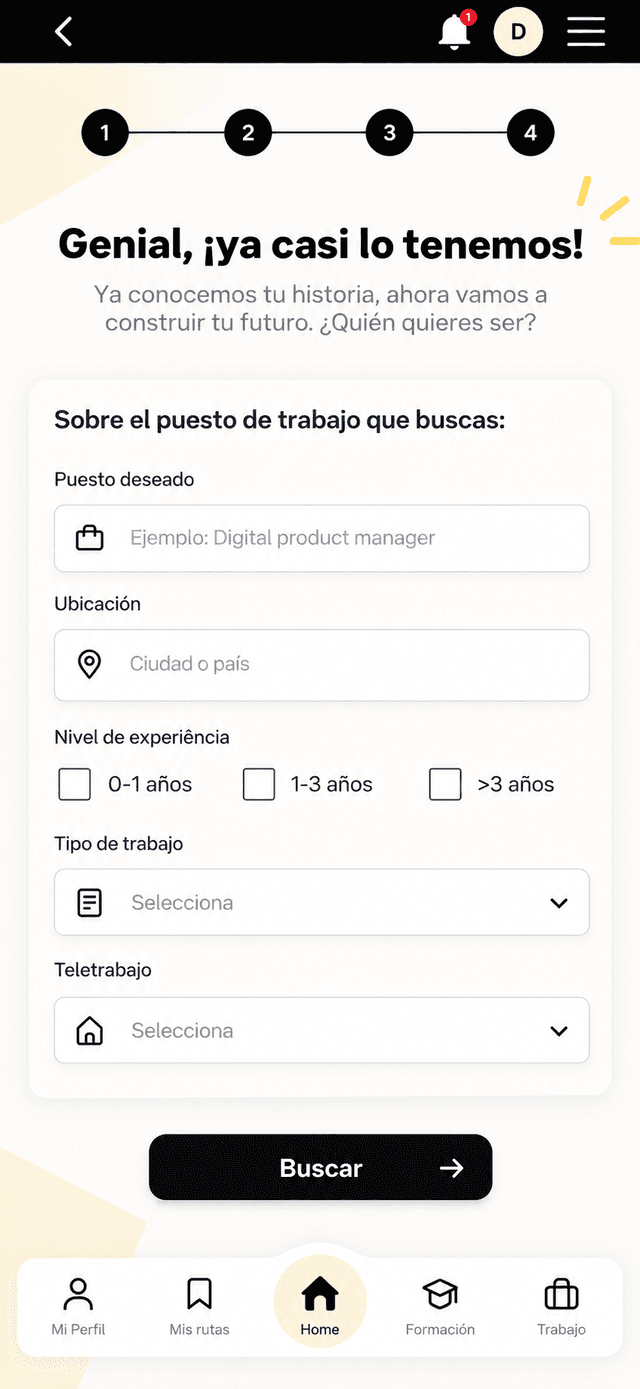
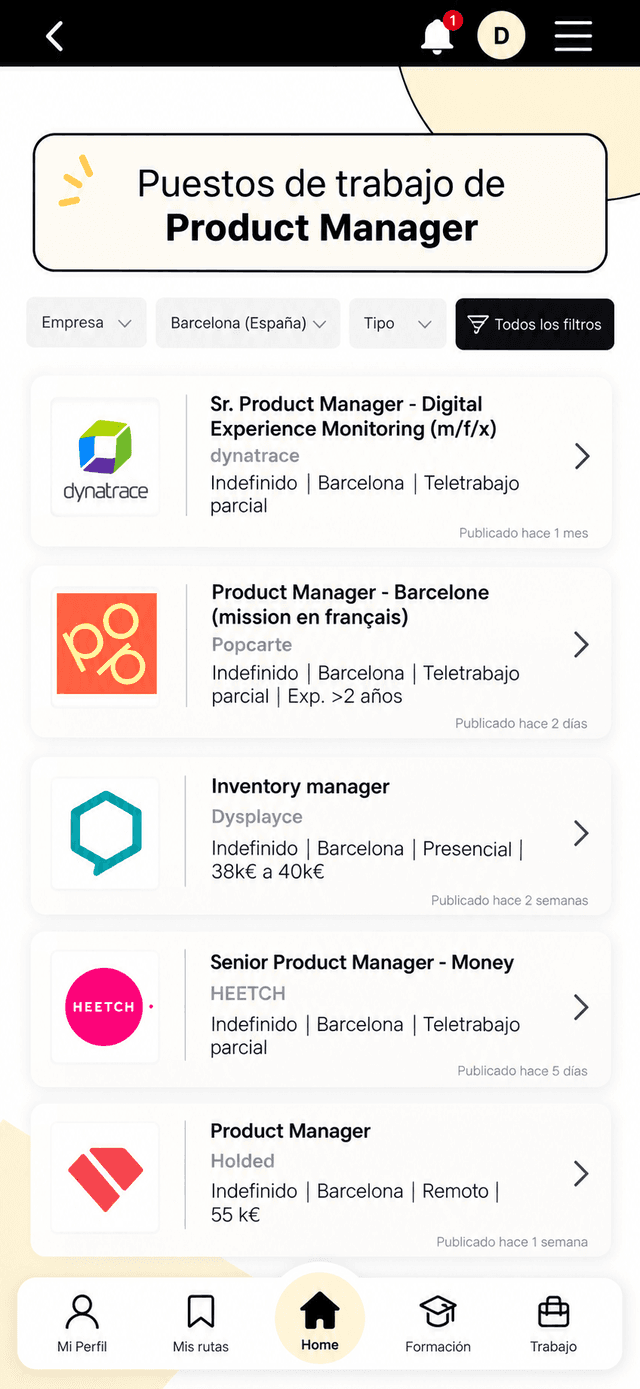
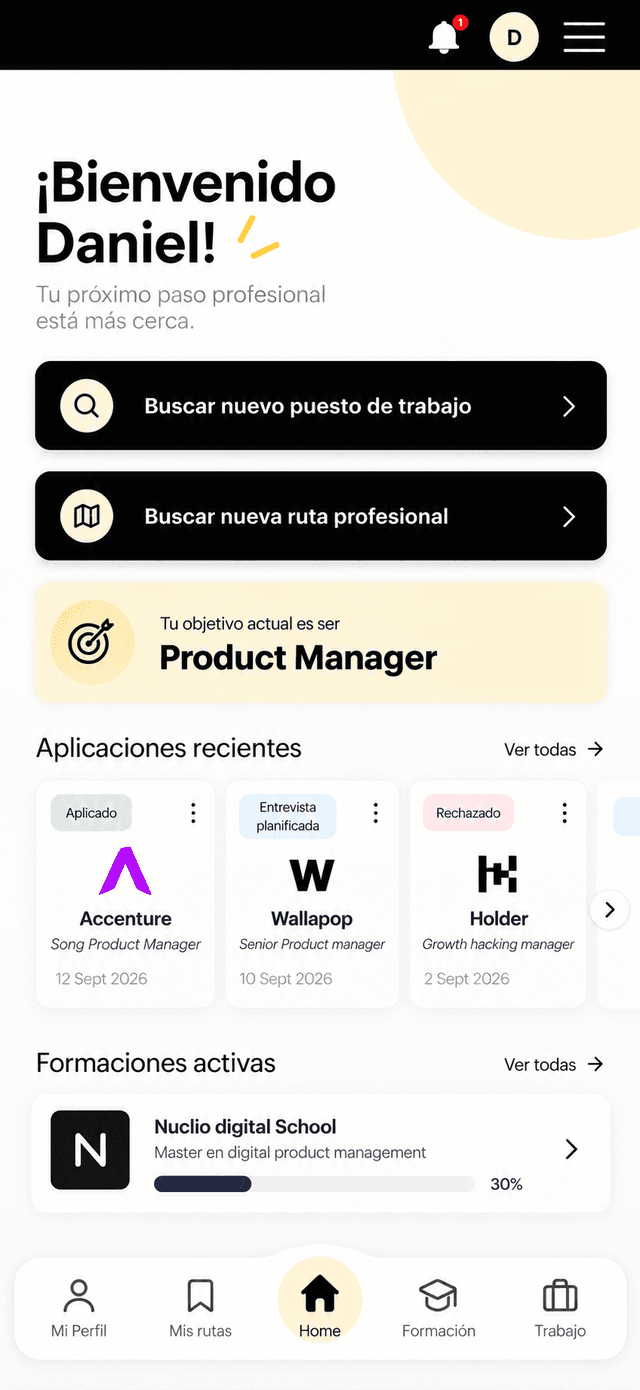
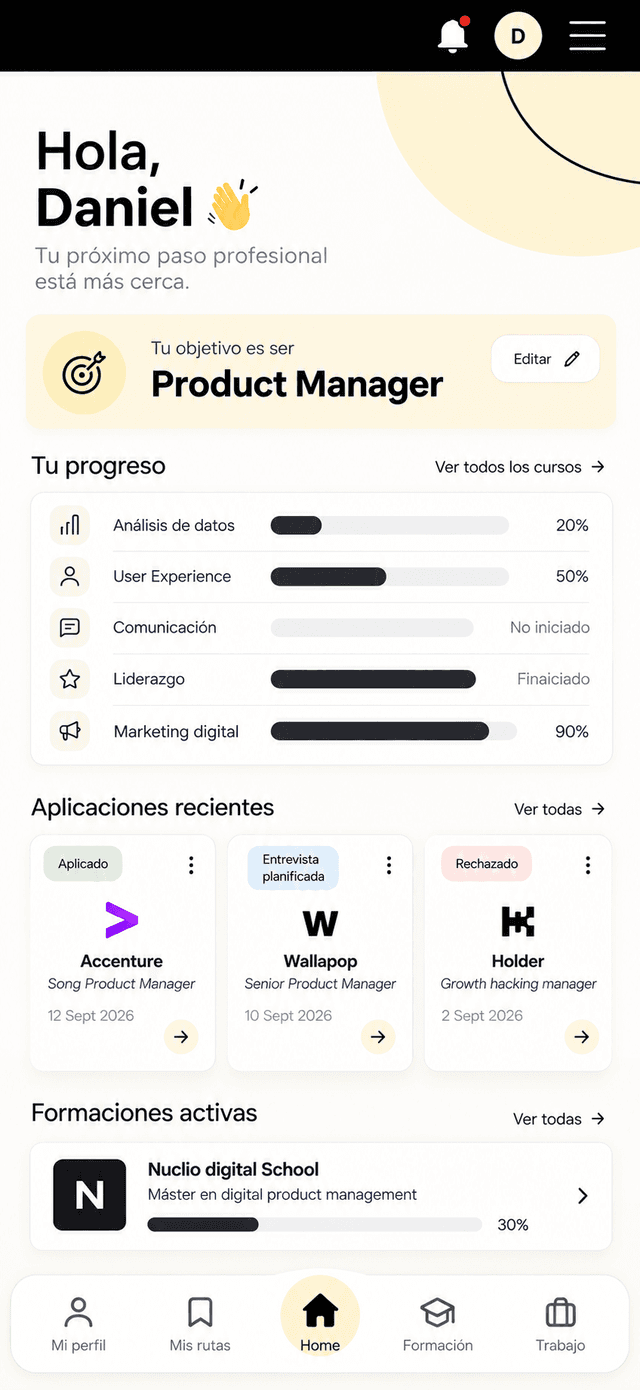
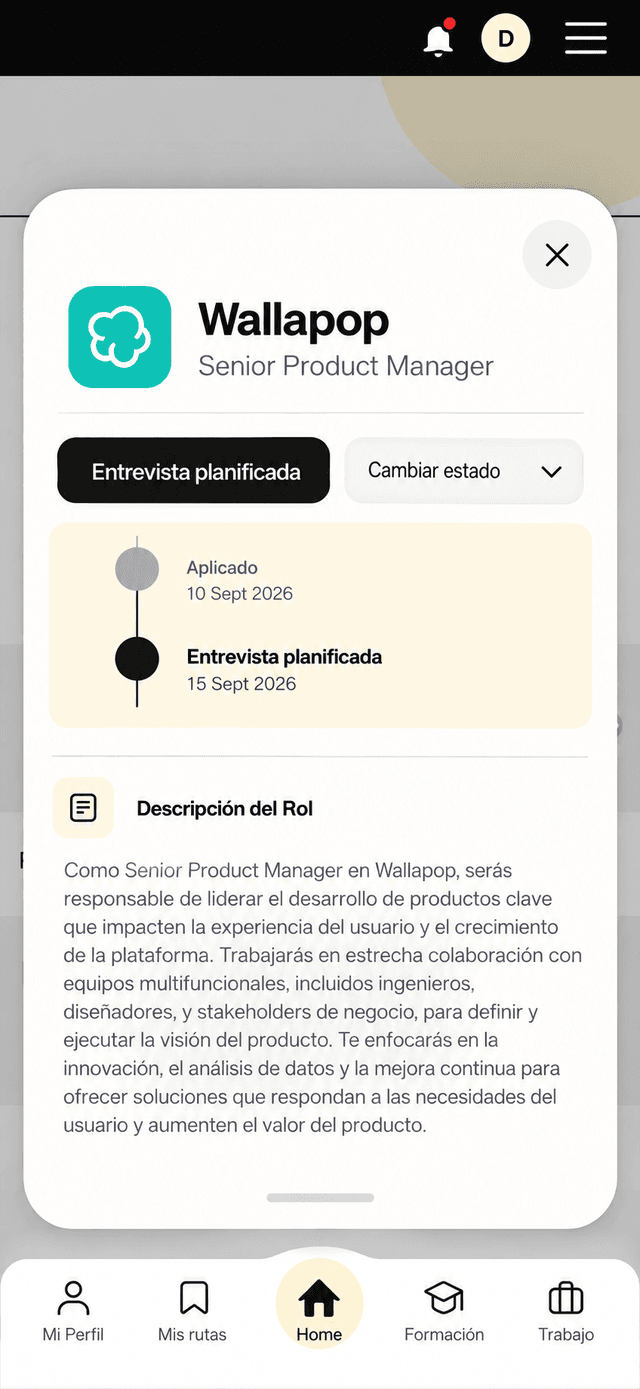
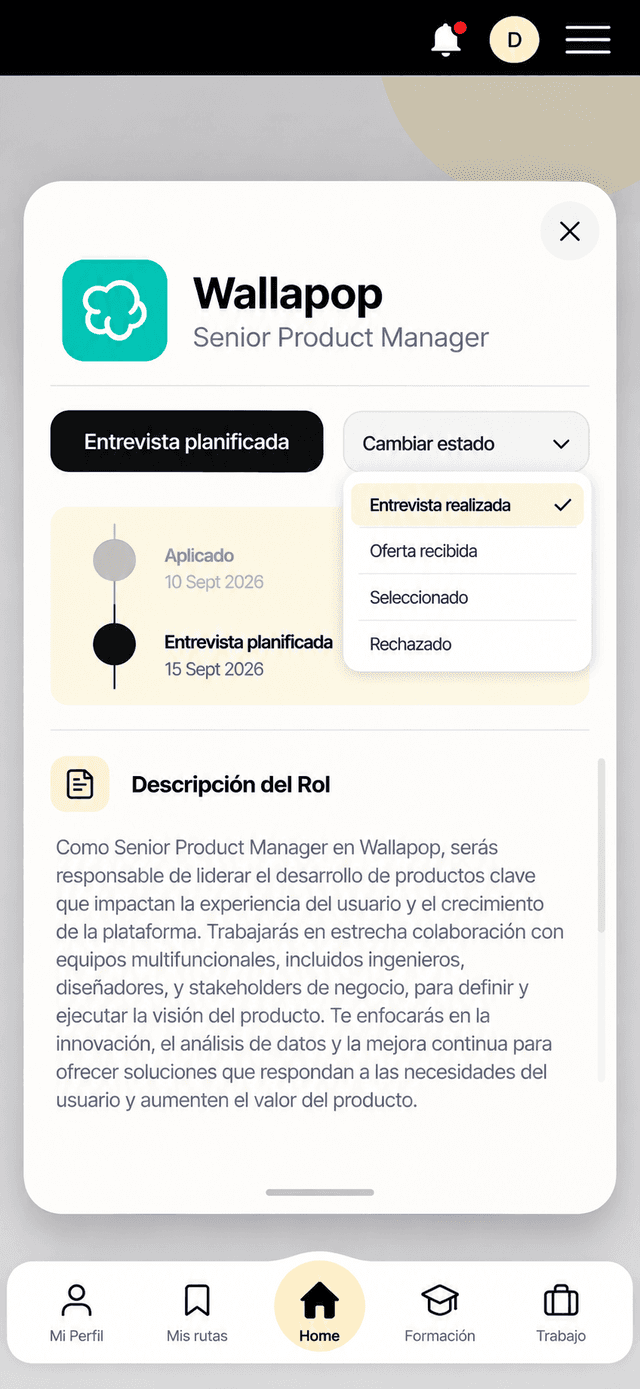
Clickable prototype I designed in Figma for the Master's final project. Fictional user and data.
Flow · Onboarding
Getting started in minutes: import your profile from LinkedIn or fill it in at your own pace, then check it before moving on.
Screen 1 of 6
06Business model and go-to-market
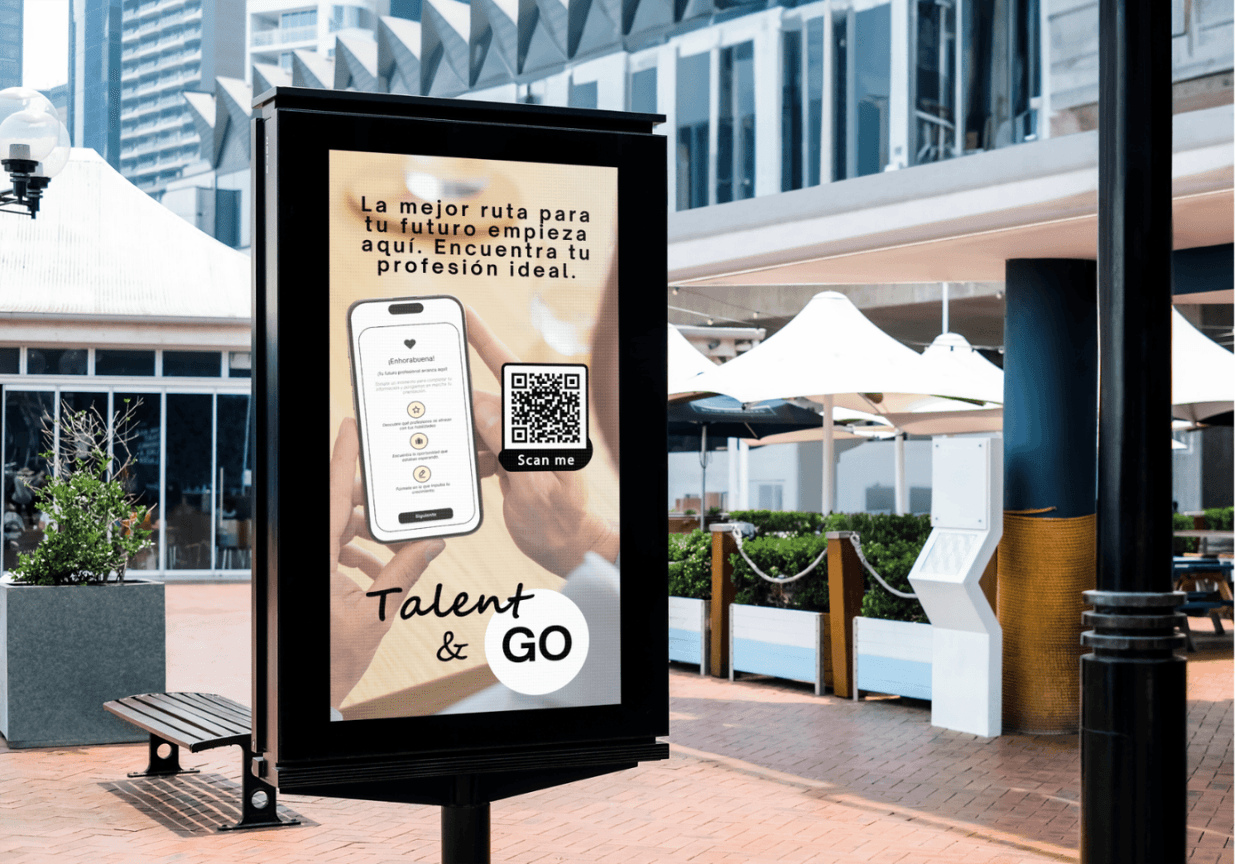
We designed a business model with four revenue streams: company subscriptions, revenue sharing with training providers, freemium and on-demand services for professionals, and data insights. Growth and retention levers covered lifetime value, retention, virality and churn, and first-quarter OKRs set the targets. The launch plan followed the funnel from awareness to conversion, with a mix of paid, owned and earned channels, a pre-launch event, a landing page and social media campaigns.
Explore the full process, step by step
An optional deep dive: eight steps from discovery to pitch, with the real artefacts.
Deep UX research
Five hypotheses to validate, tested with structured interviews across the three user groups and surveys, with AI (Condens) to spot recurring patterns. A bonus interview with the former CEO of a job platform added the view of someone who had built a similar product.
- 12 interviews
- 160 survey responses
- 3 user groups
- 5 hypotheses
- AI pattern analysis
07Outcome and what I took away
A research-informed product concept, a prioritised MVP and a clickable Figma prototype, presented to a product committee. Talent & Go ranked 2nd out of 8 final projects in the Master's cohort.
The research supported the opportunity and shaped the product, but as an academic project it didn't test commercial viability or real adoption.
What I took away
Talent & Go reinforced something I now consider fundamental in Product Management: research is most valuable when it changes a decision.
We started with an idea about training and ended up designing a product around career orientation. The most important outcome wasn't the prototype itself, but understanding why the original problem needed to be reframed.
It also gave me the opportunity to work through the full product definition process, from research and business modelling to MVP scoping, UX and go-to-market.